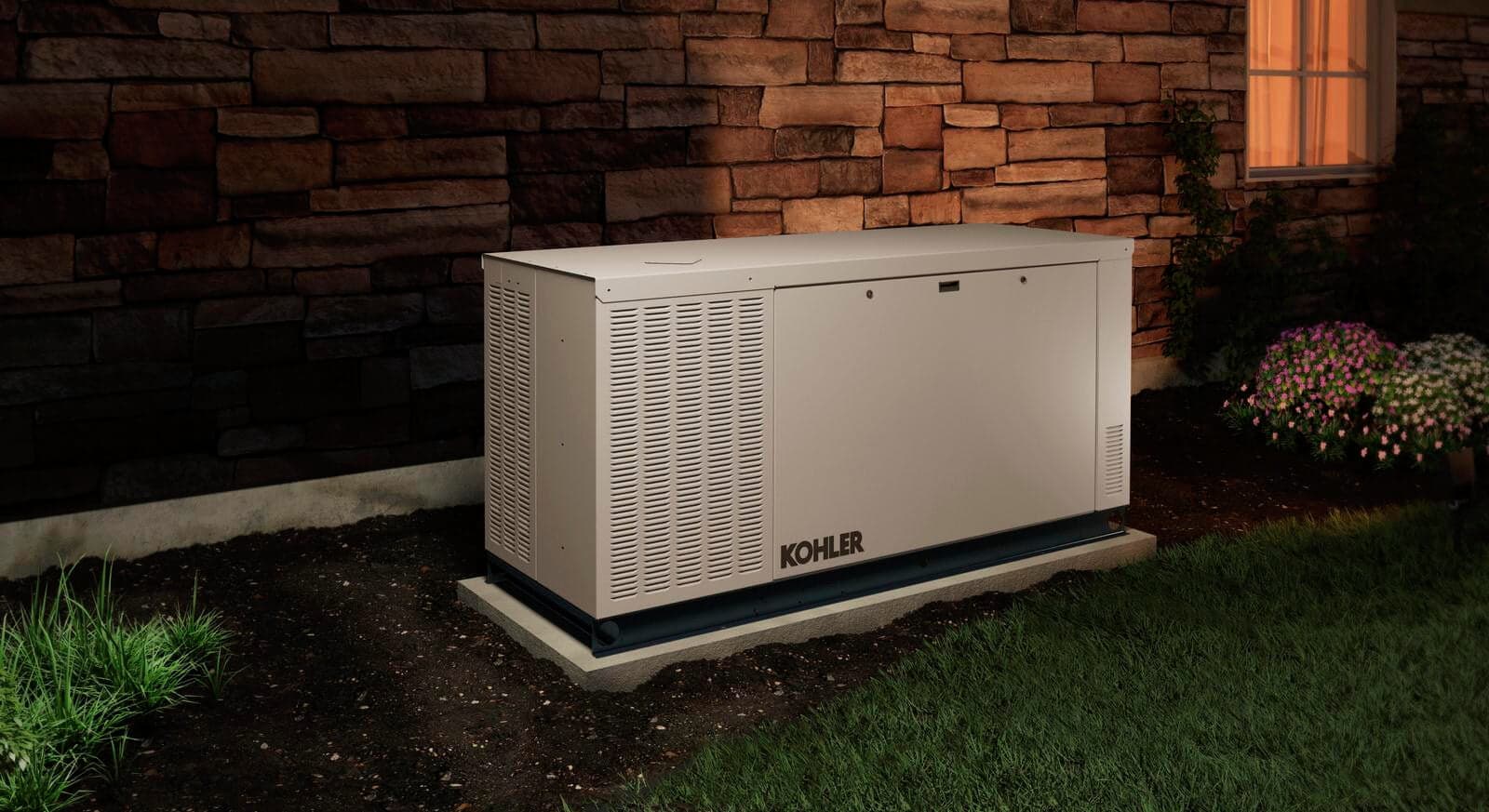
NFPA 110 Compliance Services
Emergency power systems save lives — but only if they work when called upon. OnPoint Generators helps healthcare facilities, commercial buildings, and critical infrastructure meet every requirement of NFPA 110.
What Is NFPA 110?
NFPA 110 is the Standard for Emergency and Standby Power Systems, published by the National Fire Protection Association. It establishes requirements for the performance, maintenance, operation, and testing of emergency and standby power systems that provide an alternate source of electrical power when the normal utility supply is interrupted.
The standard applies to the installation, maintenance, operation, and testing of stored-energy systems — primarily engine-driven generators — that serve as emergency or legally required standby power sources. It covers everything from fuel storage and transfer switches to exercise schedules, load testing, and record-keeping.
NFPA 110 is not optional for facilities that house emergency power systems classified as Level 1 or Level 2. Building codes, healthcare accreditation bodies (including the Joint Commission), and insurance carriers all reference NFPA 110. Non-compliance can result in citations, fines, loss of accreditation, and — most critically — failure of life-safety systems during an actual emergency.
NFPA 110 Classifications
NFPA 110 classifies emergency power systems by two criteria: the maximum time the system is allowed to take to reach full load (Type) and the minimum run time the system must sustain (Class). The most common classifications are described below.
Type Classifications
The Type designation indicates the maximum number of seconds allowed from the moment of power failure to when the generator reaches full rated load.
Type 10
The generator must restore power within 10 seconds of utility failure. This is the most demanding classification and is required for hospitals, surgical centers, and other facilities where even a brief interruption endangers life. Type 10 systems require fast-starting engines, pre-lubrication, and high-performance automatic transfer switches.
Type 60
The generator must restore power within 60 seconds. Type 60 is common for commercial buildings with fire pumps, elevators, and emergency lighting where life-safety systems must operate but a brief delay is acceptable. Many high-rise buildings and retail complexes fall into this category.
Type 120
The generator must restore power within 120 seconds. Type 120 is used for legally required standby systems that support processes or equipment where a two-minute delay does not create an immediate life-safety risk. Industrial and municipal facilities often use Type 120 classifications.
Level Designations
NFPA 110 also assigns Level designations that determine the rigor of installation, testing, and maintenance requirements.
Level 1
Level 1 systems are where failure could result in loss of human life or serious injury. This is the highest reliability requirement. Level 1 systems must meet stringent installation, testing, and maintenance requirements including monthly exercise, annual load testing, and comprehensive record-keeping.
Level 2
Level 2 systems are where failure is less critical than Level 1 but still unacceptable. These systems protect property, business continuity, and essential services. Requirements are similar to Level 1 but with some relaxed provisions for testing frequency and redundancy.
Who Needs NFPA 110 Compliance?
Any facility with an emergency or legally required standby power system is subject to NFPA 110. The standard is enforced through building codes, fire codes, and accreditation requirements. The following facility types are most commonly affected:
Hospitals & Healthcare
Hospitals, ambulatory surgery centers, nursing homes, and dialysis centers are required to maintain Level 1, Type 10 emergency power systems. The Joint Commission surveys verify NFPA 110 compliance during accreditation reviews.
High-Rise Buildings
Buildings over 75 feet tall must have emergency power for elevators, fire pumps, emergency lighting, smoke control, and communication systems. Local fire codes reference NFPA 110 for installation and testing requirements.
Data Centers
While not always legally mandated, data center operators adopt NFPA 110 as a best practice to ensure uptime for critical infrastructure. Many colocation agreements and SLAs require NFPA 110-compliant backup power.
Educational Institutions
Schools, universities, and research facilities with laboratories, data rooms, or residential halls may need NFPA 110-compliant emergency power for life-safety systems and critical research equipment.
Government & Municipal
Emergency operations centers, fire stations, police departments, water treatment plants, and sewage pumping stations all require reliable emergency power with documented compliance.
Commercial & Industrial
Manufacturing facilities, cold storage warehouses, telecommunications hubs, and retail complexes with life-safety systems must maintain compliant emergency power systems.
OnPoint Generators's NFPA 110 Compliance Services
We provide end-to-end compliance support — from initial assessment through ongoing testing and documentation. Our team understands the standard inside and out, and we work with facility managers, engineers, and code officials to ensure your system passes every inspection.
Compliance Assessment
We evaluate your existing emergency power system against NFPA 110 requirements. Our assessment identifies gaps in equipment configuration, transfer switch settings, fuel storage, ventilation, exercise schedules, and documentation. You receive a written report with prioritized recommendations and a compliance roadmap.
System Design and Installation
For new installations or system upgrades, we design emergency power systems that meet NFPA 110 from the start. This includes generator sizing, fuel system design, transfer switch selection, ventilation calculations, and sound attenuation — all engineered to satisfy your facility's specific Type and Level requirements. Visit our generator sales page to learn about the brands and models we install.
Monthly Exercise and Testing
NFPA 110 requires Level 1 and Level 2 systems to be exercised monthly under operating conditions or with a load bank. We manage your exercise schedule, perform the tests, and document the results. Annual load bank testing at the generator's rated capacity is included in our compliance programs.
Preventive Maintenance
NFPA 110 Section 8.3 requires a written maintenance schedule that follows the manufacturer's recommendations. Our maintenance programs satisfy this requirement with oil changes, filter replacements, coolant analysis, battery testing, and comprehensive system inspections on the schedule your classification demands.
Audit Preparation
When the Joint Commission, the fire marshal, or your insurance carrier schedules an inspection, we prepare your documentation package and, if needed, attend the audit to answer technical questions. Our organized record-keeping system makes it easy to demonstrate ongoing compliance.
Infrared Thermography (NFPA 70B)
Infrared scanning of electrical connections, transfer switches, breakers, and distribution panels per NFPA 70B recommendations. Identifies thermal anomalies caused by loose connections, overloaded conductors, and deteriorating components. Annual IR scans catch problems that visual inspection misses — before they cause fires, arc flash, or unexpected failures.
Documentation Requirements
NFPA 110 places significant emphasis on documentation. The standard requires that facility operators maintain written records that demonstrate ongoing compliance. During inspections and accreditation surveys, auditors will request these records — and missing or incomplete documentation is one of the most common causes of compliance citations.
OnPoint Generators maintains the following records for every client on a compliance program:
- Written maintenance schedule based on manufacturer recommendations
- Monthly exercise test logs with date, duration, and operating parameters
- Annual load bank test reports with voltage, amperage, and frequency readings
- Fuel quality test results and fuel system maintenance records
- Battery test and replacement records
- Transfer switch inspection and test results
- Repair and corrective action history
- Equipment nameplate data and system configuration details
All records are stored digitally and can be accessed on demand. We provide organized documentation packages for audits and can export records in any format your accrediting body requires.
Frequently Asked Questions
- What are the penalties for NFPA 110 non-compliance?
- Penalties vary by jurisdiction and enforcement authority. Fire marshals can issue citations and fines, require corrective action plans, or — in extreme cases — order facility closure until deficiencies are corrected. The Joint Commission can issue accreditation citations that, if unresolved, jeopardize a healthcare facility’s ability to bill Medicare and Medicaid. Insurance carriers may deny claims if a loss is related to a non-compliant emergency power system.
- Who is required to comply with NFPA 110?
- Any facility with an emergency or legally required standby power system classified as Level 1 or Level 2 must comply with NFPA 110. This includes hospitals, nursing homes, high-rise buildings, assembly occupancies, data centers, and any building where the local building code requires emergency power for life-safety systems such as fire pumps, elevators, emergency lighting, or smoke control.
- How often must emergency generators be tested under NFPA 110?
- Level 1 and Level 2 systems must be exercised at least monthly for a minimum of 30 minutes under operating conditions or with a load bank at not less than 30% of rated nameplate kW. An annual test must be conducted at the connected load or with a load bank at full rated capacity. Additional testing may be required after repairs, modifications, or extended outages.
- How much do NFPA 110 compliance services cost?
- Costs depend on the size and complexity of your emergency power system, the number of generators, your facility’s classification, and the scope of services needed. A basic compliance assessment starts around $500 to $1,500. Ongoing compliance programs — including monthly exercise, annual load bank testing, preventive maintenance, and documentation — are priced based on your specific requirements. Contact us for a detailed quote.
- What documentation do I need to maintain?
- NFPA 110 requires written records of all maintenance activities, monthly exercise test results, annual load test reports, fuel system maintenance, battery test results, transfer switch inspections, and repair history. Records must be retained for the life of the equipment. OnPoint Generators maintains all of these records digitally for our compliance program clients.
- Can OnPoint Generators help with Joint Commission survey preparation?
- Yes. We work with healthcare facility managers to organize documentation, verify system readiness, and address any deficiencies before the survey. We can attend the survey to answer technical questions about the emergency power system and provide real-time access to maintenance and testing records.
- What is the difference between emergency and standby power?
- Emergency power systems (NFPA 110 Level 1) serve loads where failure could result in loss of human life — surgical suites, ventilators, fire pumps. Legally required standby power (Level 2) serves loads that are less critical but still required by code — elevators, smoke control, emergency lighting. Both are covered by NFPA 110, but Level 1 systems have stricter testing, maintenance, and documentation requirements.
- How do I know what NFPA 110 classification my facility requires?
- Your facility’s classification is determined by the local building code, the occupancy type, and the specific systems the generator supports. Your architect or engineer of record typically specifies the classification during the design phase. If you are unsure, OnPoint Generators can review your building plans, electrical drawings, and code requirements to determine the correct Type and Level for your system.
Service Areas
OnPoint Generators provides NFPA 110 compliance services throughout Northern California and Nevada. Our service area includes:
Generators We Test for NFPA 110 Compliance
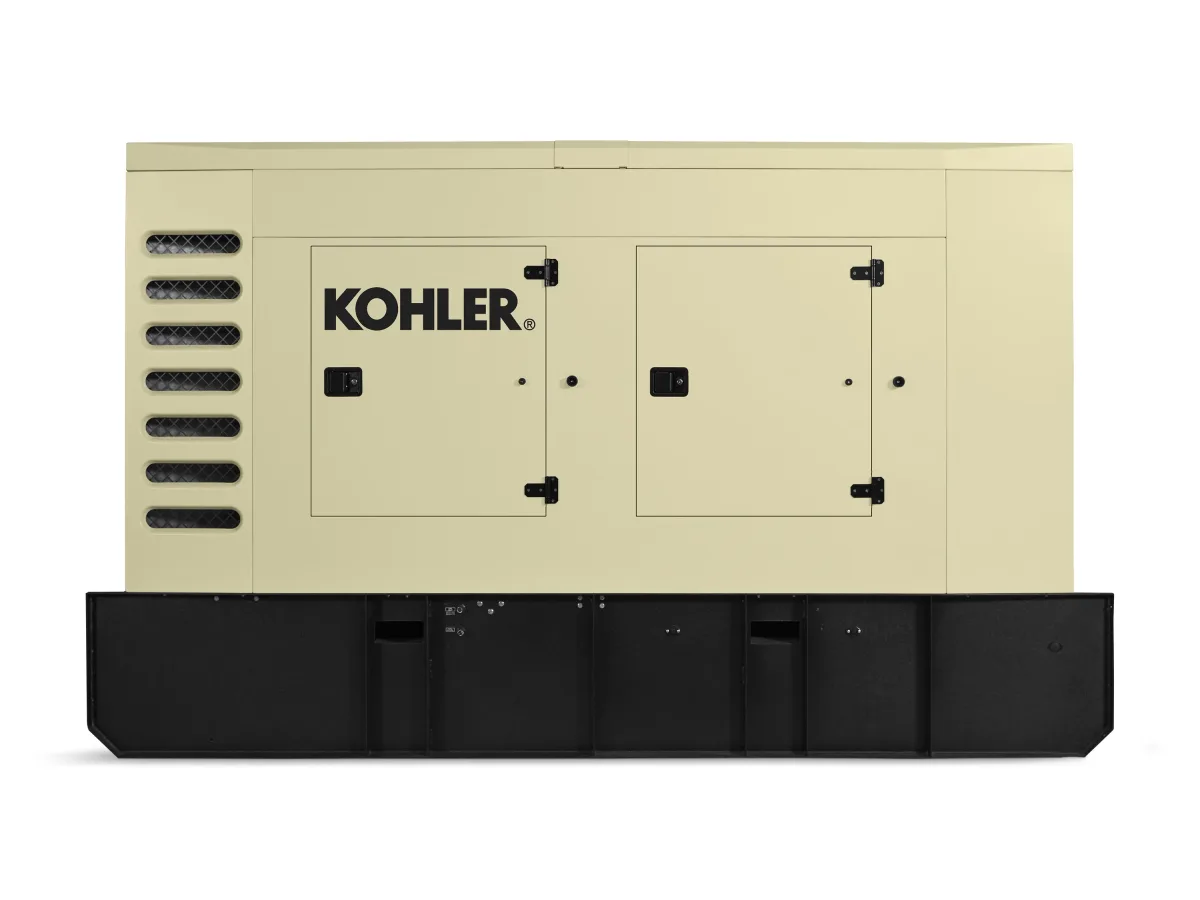
Kohler
Kohler 100REOZJF
THD below 3% at 100 kW -- the healthcare and commercial default. John Deere 4045HF285 with Decision-Maker controller.
100 kW standby · Diesel · Liquid-cooled
100 kW diesel commercial standby generator. Mid-range diesel workhorse for commercial facilities, healthcare, and institutional applications.
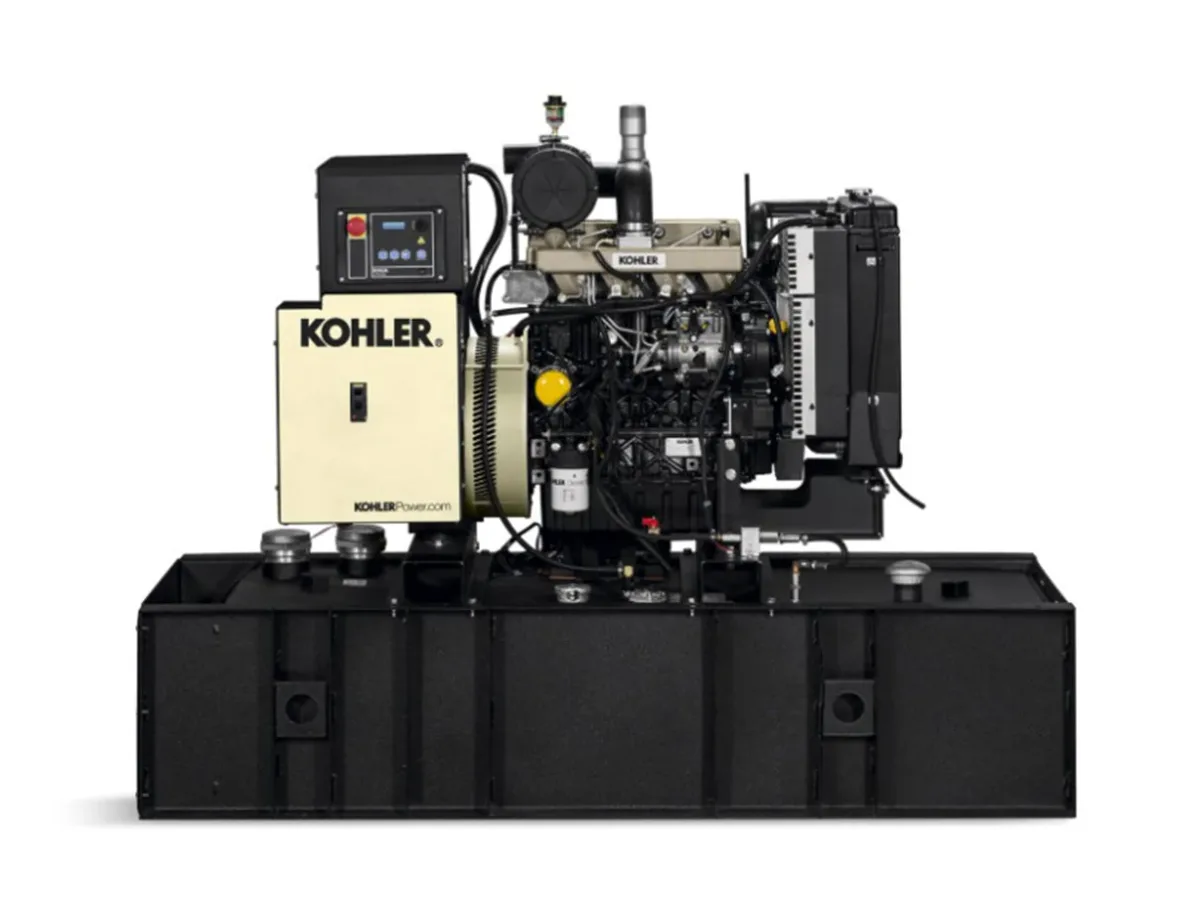
Kohler
Kohler 10REOZDC
Compact 10 kW diesel standby -- Yanmar 3TNV82A at 1800 RPM. Quiet operation with sub-3% THD for sensitive loads.
10 kW standby · Diesel · Liquid-cooled
10 kW diesel commercial standby generator. Compact Yanmar-powered diesel for small commercial, retail, and light institutional applications.
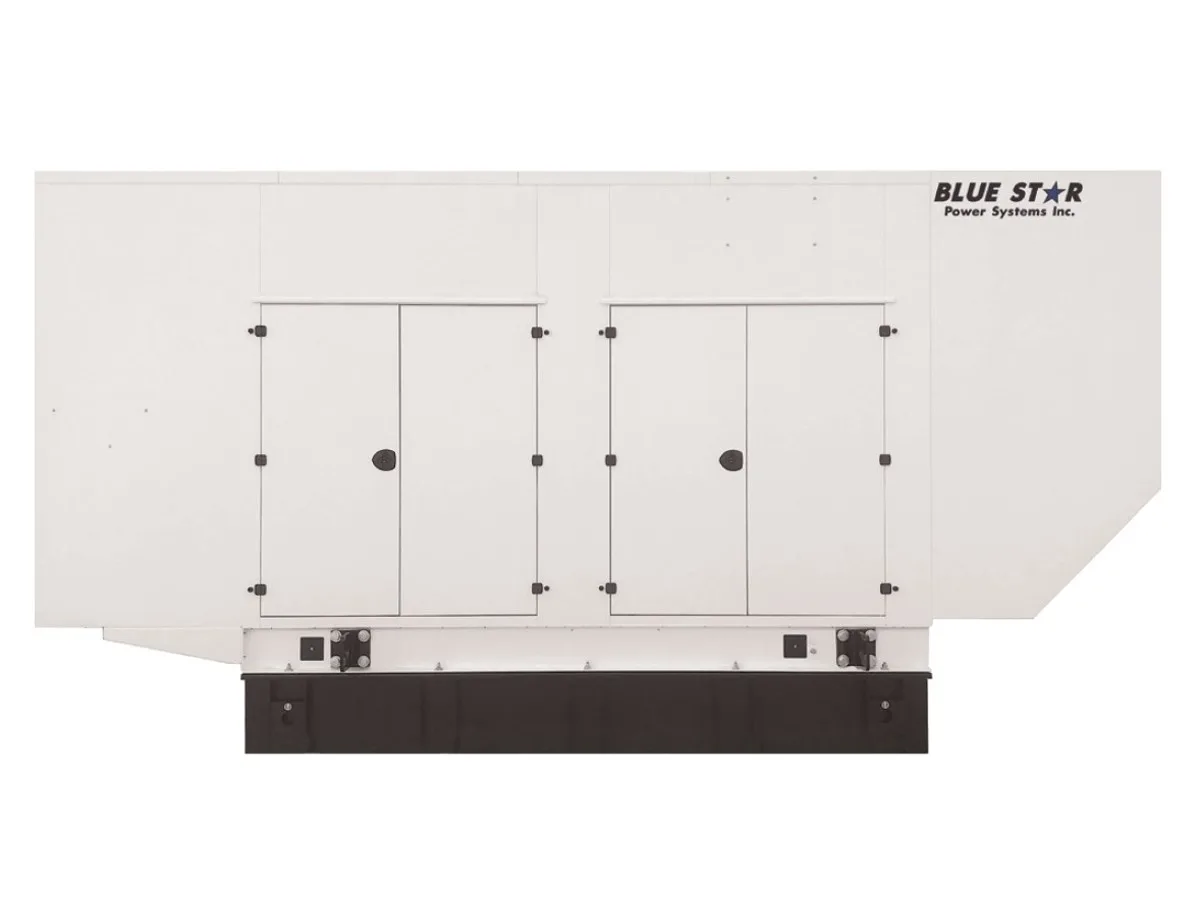
Blue Star Power Systems
Blue Star PD450-01
Open Basler controller + Perkins engine + Stamford alternator — no proprietary lock-in. Serviceable by any qualified tech, not just the dealer.
450 kW standby · Diesel · Liquid-cooled
450 kW Tier 3 diesel standby generator built by Blue Star Power Systems. Perkins 2506D-E15TAG1 six-cylinder engine with charge air cooling, Stamford HCI534C alternator, DSE DCP7310 controller.
Blue Star Power Systems
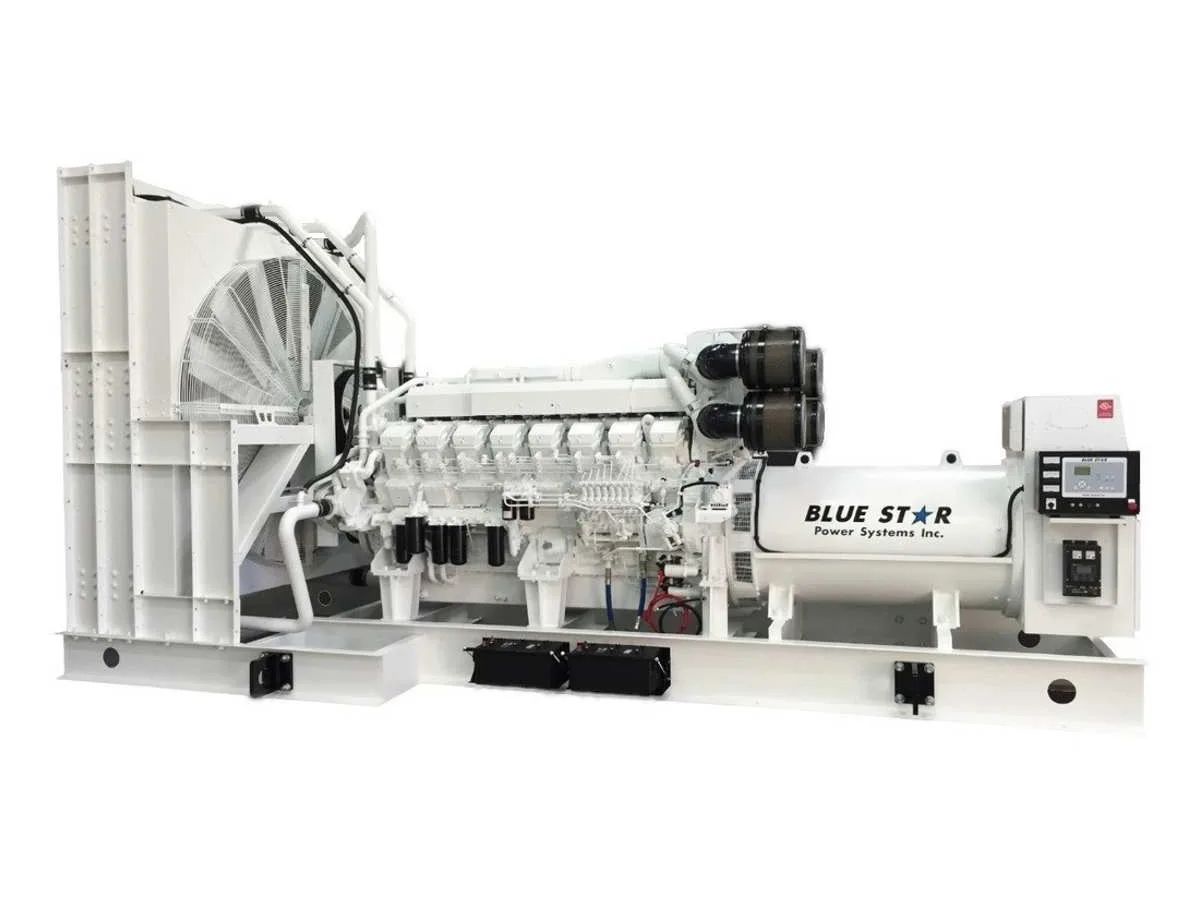
Blue Star PD500-01
Open Basler controller + Perkins engine + Stamford alternator — no proprietary lock-in. Serviceable by any qualified tech, not just the dealer.
500 kW standby · Diesel · Liquid-cooled
500 kW Tier 2 diesel standby generator built by Blue Star Power Systems. Perkins 2506C-E15TAG3 six-cylinder engine with charge air cooling, Stamford HCI534D alternator, DSE DCP7310 controller.
Caterpillar
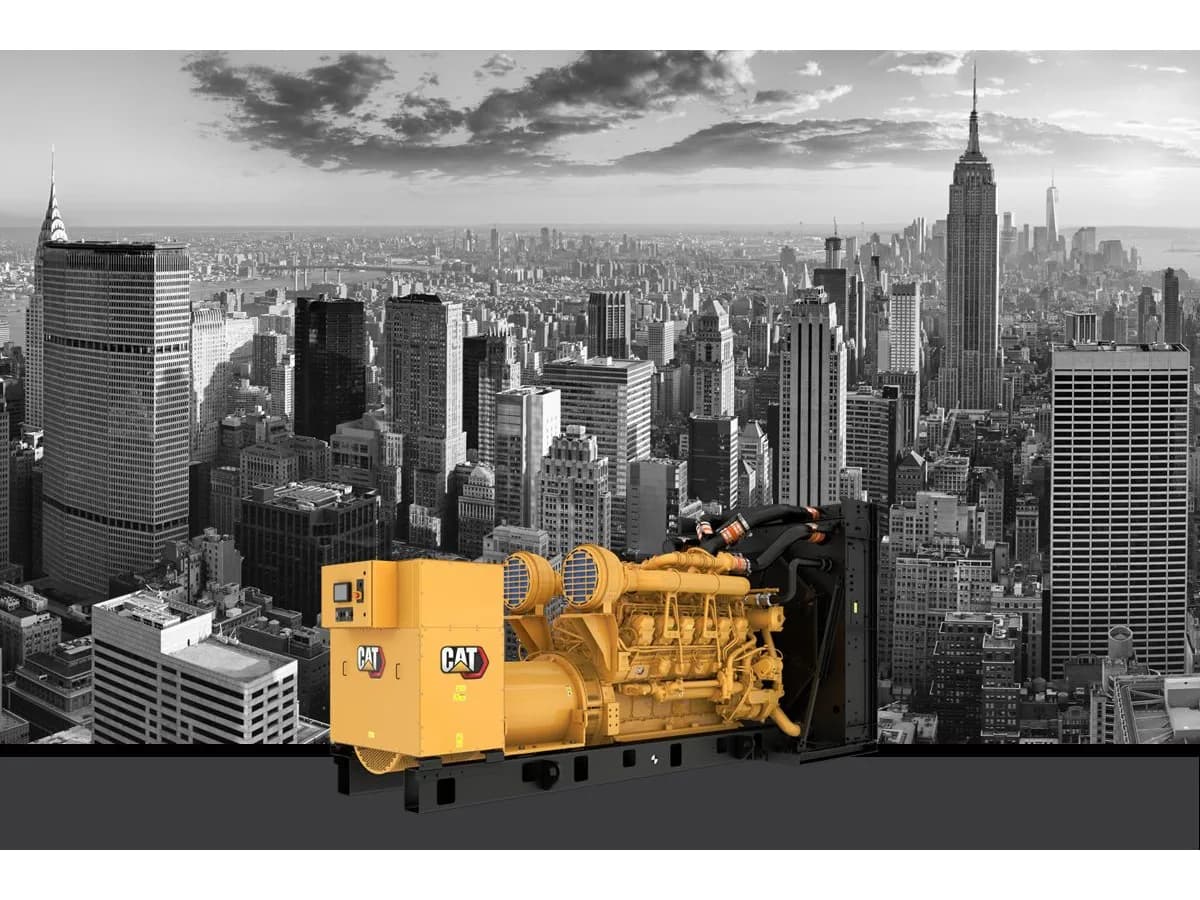
Cat 3512B
1500 kW diesel with CAT 3512B V-12. Best resale -- retains 15-25% more than Cummins/MTU. Deepest parts network.
1.5 MW standby · Diesel · Liquid-cooled
1230-1500 kW diesel generator with Cat 3512B V-12 engine. EUI fuel system, EMCP 4.2B controller, mission-critical and standby ratings.
Caterpillar
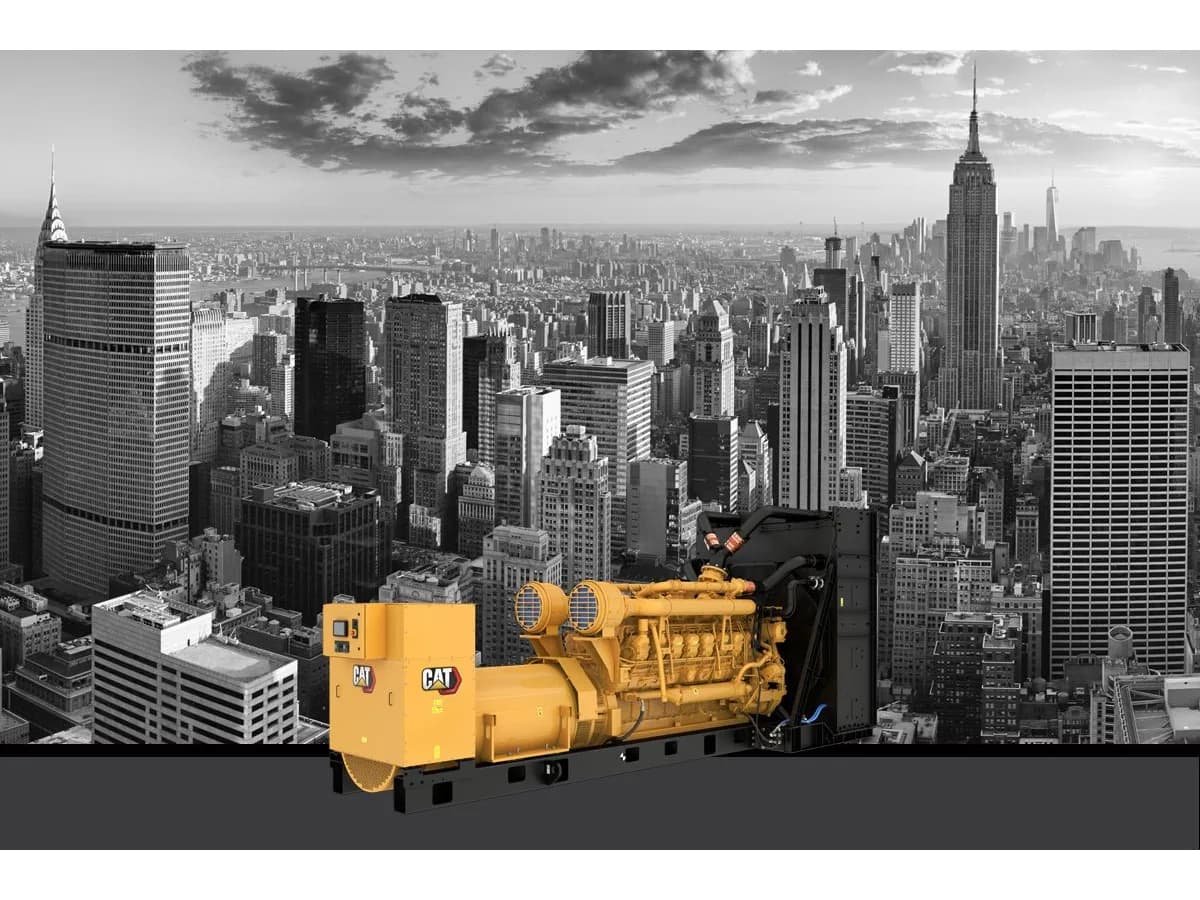
Cat 3516
1600 kW diesel with CAT 3516 V-16. Best resale -- retains 15-25% more than competitors. ~200 US dealer network.
1.6 MW standby · Diesel · Liquid-cooled
1600 kW diesel generator with Cat 3516 turbocharged V-16 engine. Mission-critical platform for data centers, hospitals, and large industrial standby and prime power.
Resources & Industries
Related Guides
Industries We Serve
Written by Dillan Ferguson, COO — BASc Mechanical Engineering, Red Seal Millwright
Regulatory References
The standards referenced on this page are published and maintained by their respective organizations.
- NFPA 110 — Standard for Emergency and Standby Power Systems (National Fire Protection Association)
- NFPA 70B — Standard for Electrical Equipment Maintenance
- NFPA 99 — Health Care Facilities Code
- The Joint Commission — Healthcare facility accreditation standards
Ensure Your Facility Is Compliant
Schedule an NFPA 110 compliance assessment. We will evaluate your emergency power system and provide a clear roadmap to full compliance.
Last reviewed: